
What alternatives are there to foam fire suppression in hangars?
If you’re interested in transitioning to a truly foam free fixed fire protection system, rather than simply replacing AFFF with fluorine free foam, there are innovative approaches to consider for aircraft hangars.
For standard based solutions, we refer to the National Fire Protection Association (NFPA).
Notably, NFPA 409, Standard on Aircraft Hangars, has moved toward much greater flexibility. The 2026 edition includes performance and risk based pathways, and its guidance specifically identifies water additives and water mist as examples of alternative hangar fire protection systems.
Further, the Fire Protection Research Foundation (FPRF) has released new guidance in recent years based on testing performed with firefighting foams and relevant statistics surrounding outdated fire suppression systems.
FPRF is an independent, nonprofit entity dedicated to planning, managing, and facilitating research, specifically in support of NFPA and their mission to make the world safer from fire, electrical, and related hazards.
Evaluating Fuel Spill Hazards in Aircraft Hangars
In light of these factors, potential alternative fire protection solutions were evaluated, including Encapsulator Agents that comply with NFPA 18A, Standard on Water Additives for Fire Control and Vapor Mitigation.
FPRF states, “Of the fuel spills inside of hangars, 92% were caused during maintenance activities and the remaining 8% were caused when a valve was accidentally opened.”
In an environment ripe for potentially large hydrocarbon pool fires, adopting an alternative capable of mitigating a variety of fuel types involved in both two-dimensional and three-dimensional flowing fuel fire scenarios is crucial. According to NFPA 11, Standard for Low-, Medium-, and High-Expansion Foam, Annex A.1.1, “Foam is not suitable for three-dimensional flowing liquid fuel fires or for gas fires.”
Through the NFPA Equivalency Statement, these advancements in fire suppression technology can be applied as a fire protection system equivalent to the intended level of the standard based on local AHJ acceptance. The NFPA equivalency clause permits the use of alternative systems, methods, or devices that offer equal or superior safety and performance.
Why Firefighting Foam Fails on Flowing Fuel
Multiple Planes
Flowing or spraying fuel burns in multiple planes at once, such as vertical walls, ceilings, or cascading drops.
Disrupted Blanket
Foam relies on forming a flat, cohesive blanket over a liquid fuel surface to block oxygen and suppress vapors.
Mechanical Breakdown
Movement, gravity, and pressure break the mechanical integrity of the foam blanket before it can seal the fuel.
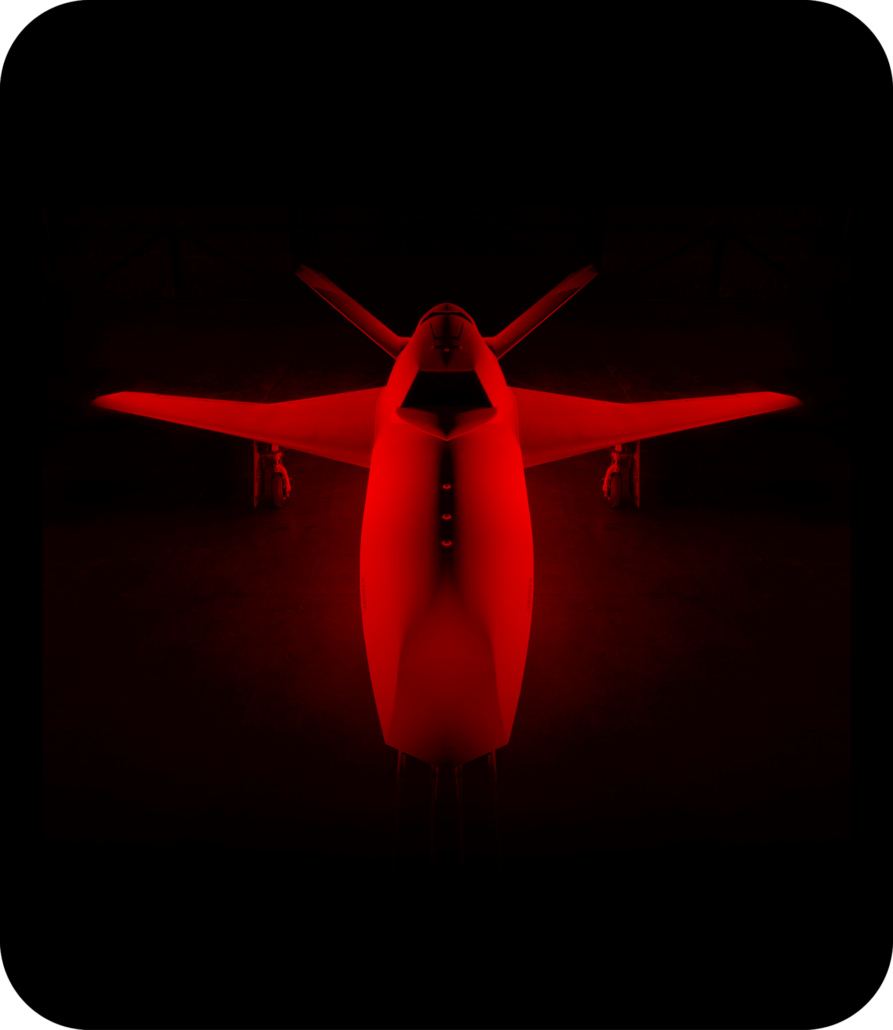
The Takeoff of Autonomous Aircraft and UAS
Flowing fuel hazards aren’t the only concern for fire protection contractors, designers, and engineers.
In the wild, Autonomous Aircraft and Unmanned Aerial Systems (UAS) face their fair share of safety hazards, including technical failures, mid-air collisions, and complex environmental challenges. However, the potential threats they pose don’t stop there.
Hangars housing these highly identifiable flying objects must come equipped with a robust fire suppression system capable of extinguishing fires involving a variety of lightweight, high-strength composite materials and advanced polymers utilized to maximize flight time and durability.
Carbon Fiber Composites
Carbon-Fiber-Reinforced Polymers (CFRP) form the main body, frame, and skins of most autonomous aircraft. They offer an exceptional strength-to-weight ratio and low density.
Lightweight Metals
Aluminum alloys and titanium are used for high-stress joints, motor mounts, and landing gear where vibration resistance and structural rigidity are required.
Fiberglass and Aramid
Fiberglass (GFRP) and Kevlar/aramid fibers are often used in specific sections to balance cost, flexibility, and radio frequency transparency for antennas.

Performance Criteria for Aircraft Hangar Fire Protection Systems
Project Background
NFPA 409 has historically (until the 2022 edition) required various fire protection options using firefighting foam systems. The requirements for foam fire protection systems in NFPA 409 (e.g., low expansion, high expansion) are largely based on large-scale fire tests (~900 ft2 pool fire tests) conducted by FM Global in the 1970’s, however it has been a challenge to replicate these large-scale pool fire tests today. There have traditionally been no avenues for evaluating alternative fire protection methods for possible inclusion in NFPA 409. While systems such as water mist, compressed air foam, clean agents and other solutions have been proposed, the path to understand their effectiveness in protecting an aircraft hangar is unclear. Therefore, it was necessary to develop an alternative evaluation method that can be used to assess the performance of other technologies on the assumed aircraft hangar fire scenario.
Goal and Approach
The overall goal of this research program is to establish an evaluation method that can be used to assess the performance of alternative fire protection systems for aircraft hangar facilities.
A risk based approach for hangar fire protection was proposed and outlined within this report. A sample risk assessment with discussion on various scenarios and consequences is provided therein.
> Read the Full FPRF Report
Alternative 1 | Water Only Sprinkler or Deluge Systems
FPRF reported in its 2025 Foam Roadmap that the U.S. Navy had moved its low-level trench nozzle approach toward water only discharge and was conducting further research on water only hangar protection. The same report described an overall DoD trend away from foam in aircraft hangars.
Water only systems have gained some traction for particular use cases, such as unfueled aircraft hangars. FM Global, for example, states that water only ceiling sprinklers can be sufficient for unfueled aircraft hangars.
The problem arises when you introduce a large Jet A/JP-8 spill. Fuel can float on water, and aircraft wings and fuselages can shield floor level fires from overhead sprinklers.
FM Global specifically identifies these issues as major challenges, and this is before you take into account the widespread increase of Class D combustible metal and Class L lithium-ion battery fire hazards present in modern hangars.
Alternative 2 | Water Additive Sprinkler or Deluge Systems
This is the most significant alternative to foam for a hangar containing fueled aircraft.
NFPA 409’s alternative system guidance explicitly includes water additives. The concept is fundamentally different from foam: rather than building and maintaining a blanket over the fuel, an approved water additive system modifies the properties and extinguishing performance of the water droplet itself.
In the case of Encapsulator Agents, the Federal Aviation Administration (FAA) lays this out clearly in Advisory Circular (AC) 150/5210-6E, Aircraft Fire Extinguishing Agents for Airports: “Encapsulator Agents change the chemical makeup of a water droplet with the introduction of spherical micelles to neutralize the fuel.”
The addition of spherical micelles allows NFPA 18A-compliant Encapsulator Agents like F-500 EA® to extinguish hangar fires involving a myriad of materials.
Class A
Solid combustible materials where cooling and penetration guide suppression design.
Class B
Flammable liquids and gases, with focus on vapor control and flowing fuel isolation.
Class C
Electrical equipment with appropriate application to account for stranded energy.
Class D
Combustible metals requiring a specialized alternative due to temperature and reactivity.
Class L
Lithium-ion batteries warranting a system that can stop thermal runaway propagation.
NFPA 18A also provides a framework for water additives used on Class B hazards through sprinklers, open-head deluge systems, or other specifically tested and listed systems. Application density and duration generally remain tied to the applicable hazard standard unless appropriate testing and listing justifies otherwise and the AHJ accepts the design.
> View Lithium-ion Battery Fire Testing with F-500 EA®
Alternative 3 | Water Only Water Mist Systems
Water mist is another explicitly recognized NFPA 409 alternative.
Its attractions are obvious: dramatically reduced water demand, limited collateral damage, excellent cooling, and the potential for local-application protection.
However, aircraft hangars are a difficult water mist environment for multiple reasons:
- Enormous Volumes
- High Ceilings
- Open Hangar Doors
- Ventilation
- Large Aircraft
Consequently, water mist usually needs to be engineered around a specific tested fire scenario rather than simply substituting mist nozzles for a conventional hangar system. NFPA’s alternative system guidance contemplates total flooding, local flooding, or localized protection depending on the application.
Alternative 4 | Water Additive Water Mist Systems
Water mist systems that benefit from the injection of a water additive, like F-500 EA® Micelle Mist, are engineered for lithium-ion battery fire suppression and beyond. They combine the physical cooling performance of a water mist system with an Encapsulator Agent that can control flammability, explosivity, and toxicity threats in the event of an aircraft hangar fire.
Unlike conventional water mist, which relies solely on heat absorption and oxygen displacement, utilizing F-500 EA® as a water additive allows these systems to interact with all four legs of the Fire Tetrahedron simultaneously, making an otherwise difficult environment manageable through three unique features.
Encapsulation
Fuel is driven into the internal portion of the droplet to be neutralized, separating it from oxygen on a molecular level.
Rapid Heat Reduction
Thermal energy is absorbed 10x faster than plain water through thermal conveyance.
Free Radical Interruption
The high molecular weight of droplets helps to stop the combination of free radicals.
All this is achieved with substantially less water and damage, intensifying the benefits of an already state-of-the-art water mist system.
Comparing Hangar Fire Suppression Alternatives
| Alternative | Hangar Applications | System Limitations |
|---|---|---|
| Water Only Sprinkler/Deluge | Unfueled Aircraft, Ordinary Combustibles, Storage, Low Fuel-Risk Environments | Water alone has significant limitations on hydrocarbon pool fires. |
| Water Additive Sprinkler/Deluge | Fueled Aircraft, Autonomous Aircraft, Combustible Metals, Lithium-ion Batteries | Requires a hazard-specific fire suppression system design and AHJ approval. |
| Water Only Water Mist | Local, Defined Areas, Small-Scale Aircraft and Hangar Configurations | High ceilings, open doors, and large fuel spills hinder effectiveness. |
| Water Additive Water Mist | Fueled Aircraft, Autonomous Aircraft, Combustible Metals, Lithium-ion Batteries | Requires a hazard-specific fire suppression system design and AHJ approval. |
Frequently Asked Questions
What is an Encapsulator Agent?
Foams work on a mechanical level, relying on a bubble blanket to separate the fuel from the oxygen. Unlike foams, Encapsulator Agents work on a molecular level, relying on spherical micelles to encapsulate fuel. These spherical micelles work on all four legs of the fire tetrahedron simultaneously to deliver three unique features: encapsulation, rapid heat reduction, and free radical interruption.
Encapsulator Agents are recognized in NFPA 18A, Standard on Water Additives for Fire Control and Vapor Mitigation. This is the first standard outlining the criteria an agent must meet to be classified as an Encapsulator Agent. The Spherical Micelle Stability Test protocol in Section 7.7 evaluates a concentrate’s ability to form stable spherical micelles which are capable of encapsulating hydrocarbon and polar based fuels, thereby rendering them nonflammable.
What types of fires can F-500 EA® extinguish?
F-500 EA® can effectively extinguish blazes containing mixed materials.
Class A
Wildland Fires, Wood, Paper, Cloth, Rubber, Plastic, Coal, Etc.
Class B (2D)
Gasoline, Diesel Fuel, Oil, E10, E85, Ethanol, Methanol, Jet Fuel, Etc.
Class B (3D)
Transformers, Oil Rigs, Aircraft Turbines, Distillation Columns, Etc.
Energized Environments
Solar Panel Installations, Charging Stations, Substations, Etc.
Class D
Magnesium, Titanium, Aluminum, Zirconium, Lithium, Etc.
Lithium-ion Batteries
Battery Energy Storage Systems, EVs, E-bikes, Phones, Laptops, Etc.
Is F-500 EA® environmentally friendly?
Yes! F-500 EA® is fluorine free, biodegradable, and noncorrosive.
Nontoxic & Non-Skin Sensitizing
F-500 EA® was found to be non-sensitizing when tested in accordance with OECD-406.
Non-hazardous
F-500 EA® does not contain any ingredients reportable under the Superfund Amendments, Re-authorization Act (SARA) Title III, Section 313, or Comprehensive Environmental Response Compensation Liability Act (CERCLA). It can be discarded as a non-hazardous waste under RCRA CFR261.
Biodegradable
Testing shows that F-500 EA® is fully biodegradable. As with any substance, care should be taken to prevent uncontrolled discharge from entering ground water, surface water, or storm drains. With advance notice, F-500 EA® can be treated by local biological wastewater treatment plants. The lower the Biochemical Oxygen Demand (BOD) and Chemical Oxygen Demand (COD), the lower the demand for oxygen and the better for the aquatic ecosystem. When compared to several AR-AFFF products, F-500 EA®’s BOD is 87% less and its COD is 80% less.
EPA NCP Product Schedule Listed
F-500 EA® is listed on the National Contingency Plan Product Schedule of the U.S. Environmental Protection Agency (EPA) as a surface washing agent.

