
Industrial Fire Protection for Emerging Technology: Preparing for a New Risk Landscape
The next generation of industrial and commercial systems is taking shape across factory floors, test environments, transportation networks, logistics facilities, defense operations, and remote infrastructure. As these operations become more automated, electrified, and interconnected, industrial fire protection must evolve alongside them.
Robotics are working alongside people. Autonomous platforms operate in environments that once required constant human control. Electrified equipment is replacing traditional mechanical systems. Artificial intelligence is helping organizations monitor assets, coordinate movement, optimize production, and make real-time decisions.
These advances can improve speed, precision, safety, and productivity. They can also change the fire-risk landscape.
Effective industrial fire protection for emerging technology must account for more than the presence of new equipment. It must consider how energy, materials, software, automation, and physical infrastructure interact throughout development, production, testing, charging, maintenance, storage, and deployment.
More Capability Often Means More Concentrated Risk
Advanced systems frequently combine several hazards within a compact footprint.
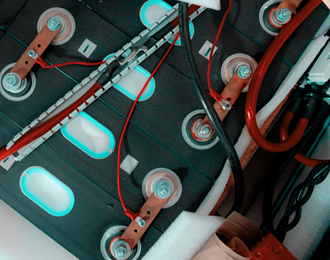
A robotic production cell may include energized electrical equipment, motors, lubricants, polymers, sensors, control hardware, and battery-powered components. An autonomous vehicle platform may combine lithium-ion batteries, power electronics, composite materials, communication equipment, and high-value computing systems. A remote industrial operation may contain automated machinery that continues running with limited personnel nearby.
None of these hazards are necessarily new on their own. What is changing is the way they are being combined.
As systems become more energy-dense and interconnected, a single incident can involve multiple fuels, heat sources, and failure modes. A fault that begins with an electrical cabinet may affect nearby plastics or lubricants. A battery failure may create intense heat, flammable vapor, smoke, and the potential for propagation. An overheated bearing may ignite accumulated dust or material deposits.
The modern industrial fire protection challenge is therefore not always limited to extinguishing a visible flame.
It may also require rapid heat removal, access to concealed components, vapor control, protection of surrounding equipment, and continued monitoring for re-ignition.
Automation Changes the Response Environment
Traditional emergency planning often assumes that a person will see the incident, raise an alarm, and begin a response.
That assumption becomes less reliable as operations become more automated, distributed, or remote.
Autonomous systems may operate across large facilities, outdoor test areas, warehouses, ports, mines, agricultural sites, or locations where personnel are not stationed continuously. Even inside an occupied facility, automated equipment can continue operating behind guarding, within enclosed cells, or across areas that are difficult to access quickly.
This makes response time an important consideration.
Industrial fire protection may need to include a combination of early detection, automatic system activation, localized suppression, mobile response equipment, and clear procedures for trained personnel. The correct approach will depend on the hazard, the location, the availability of water, the value of the equipment, and the consequences of an interruption.
As operations become more autonomous, emergency protection must become more immediate and appropriately engineered.
Cooling Is Central to Incident Control
In many contemporary industrial fire protection hazards, flame knockdown is only one part of the response.
Batteries, metals, machinery, motors, and structural components can retain substantial thermal energy after visible flames have been reduced. If that heat is not removed effectively, the incident may continue beneath the surface or re-emerge after the initial response.
This is why cooling performance matters.
Plain water remains an essential suppression medium, but its effectiveness can be limited when it runs off, fails to penetrate a material, or loses contact with an extremely hot surface. Agents that reduce surface tension and improve wetting can help water reach more of the hazard and remain effective where heat removal is required.
F-500 Encapsulator Agent (F-500 EA®) is one example of this approach. When proportioned with water for an appropriate application, F-500 EA® is designed to improve wetting, support rapid heat reduction, and help reduce the potential for re-ignition.
The agent is only one part of the equation. Delivery methods, flow, concentration, system design, access, and operator training remain essential.
Protection Must Match the Operation
There is no single configuration for every advanced industrial environment.
A small research or assembly area may require portable protection for incipient incidents. A larger production facility may benefit from mobile response units that trained personnel can deploy quickly. Defined high-hazard areas may require automatic fixed protection integrated into deluge, sprinkler, or water mist infrastructure.
Depending on the application, F-500 EA® can be delivered through fire extinguishers, carts, QAMUs, compressed-air suppression systems, water mist configurations, proportioning equipment, bladder tanks, or specialized nozzles.
These systems should not be viewed as interchangeable products. They are different ways of delivering suppression capability at the scale and location where it is needed.
For example, a mobile unit may support rapid intervention in a test facility or maintenance area. A fixed proportioning system may provide broader industrial fire protection for a manufacturing space. A specialized applicator may be needed to reach a concealed or deep-seated hot spot.
The objective is not to install more equipment. It is to select the right combination of agent, delivery method, detection, and response planning for the actual hazard.
Industrial Fire Protection as Part of Operational Resilience
For organizations developing advanced technology, the consequences of a fire can extend far beyond the damaged asset.
An incident may interrupt testing, delay production, restrict access to a facility, affect regulatory milestones, disrupt customer deliveries, or require extensive cleanup and inspection. Damage to specialized equipment may be difficult to replace quickly.
Industrial fire protection should therefore be considered part of operational resilience.
A resilient strategy asks several questions:
How quickly can an abnormal condition be detected? Can the hazard be reached immediately? Is the suppression method suitable for the fuels and materials involved? Will it remove enough heat to reduce re-ignition risk? What effect could the response have on surrounding equipment, personnel, and recovery time?
As emerging technologies reshape how organizations operate, these questions should be addressed early, not after the systems are already in service.
The companies building more intelligent, autonomous, electrified, and connected operations also need protection strategies designed around the complexity of those operations. That means moving beyond a one-size-fits-all response and evaluating the complete relationship between the hazard, the suppression agent, the delivery system, and the continuity requirements of the business.
Fire protection for emerging technology is ultimately not about slowing innovation. It is about helping advanced operations continue safely, reliably, and with greater resilience as the risk landscape evolves.


Contact Us for More Info
on Industrial Fire Protection for Emerging Technology
"*" indicates required fields


