
What is a Class L Fire? Understanding ISO 3941:2026 and Lithium-ion Battery Hazards
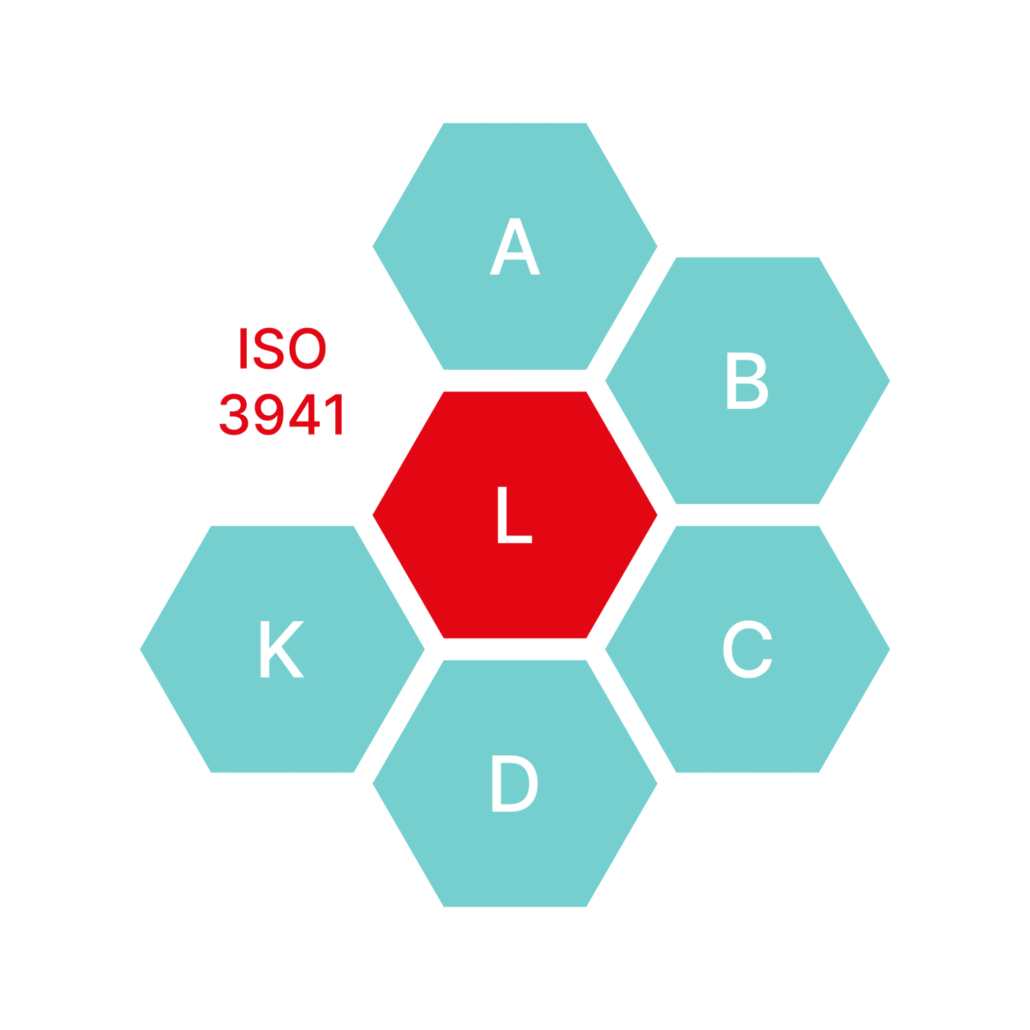
A Class L Fire refers to a fire involving lithium-ion cells and batteries, as defined in ISO 3941:2026, Classification of Fires. The introduction of Class L reflects the growing recognition that lithium-ion battery fires exhibit characteristics distinct from traditional fire classifications, driven by internal electrochemical energy release rather than surface combustion alone.
Fire classification standards exist to support consistent hazard identification and suppression strategy selection by categorizing fires according to the nature of the fuel involved. ISO 3941, Classification of Fires, has long served this role by defining classes based on physical fuel states such as solids, liquids, gases, metals, and cooking media. Until recently, lithium-ion battery fires were addressed indirectly within this structure.
The Unique Nature of Lithium-ion Battery Fire Hazards
Lithium-ion battery failures are driven by internal electrochemical reactions, not conventional surface combustion. Under abusive thermal, electrical, or mechanical conditions, cells may enter thermal runaway, releasing stored energy rapidly and uncontrollably.
Documented lithium-ion battery fire behavior has included:
- Rapid heat release independent of external oxygen.
- Venting of flammable and explosive electrolyte vapors.
- Directional jet flames and projectile cell ejection.
- Toxic and corrosive off-gas production.
- Cell-to-cell propagation and delayed re-ignition due to stranded energy.
These characteristics do not align neatly with legacy fire classes and have historically complicated both suppression tactics and post-incident risk management.
Evolution of Fire Protection Guidance for Lithium-ion Batteries
For many years, lithium-ion battery fires were treated by default as Class A fires, largely because batteries contain solid materials. This resulted in widespread reliance on copious amounts of water as the primary suppression strategy. While water remains an effective cooling agent, experience has shown that cooling alone does not consistently address propagation, fuel involvement, or re-ignition risk in lithium-ion battery events.
As lithium-ion energy density increased and deployments expanded into more confined and occupied environments, the need for clearer technical differentiation became increasingly evident. The lack of a dedicated classification limited the ability of engineers, authorities having jurisdiction, and system designers to consistently evaluate risk and compare suppression approaches.
ISO 3941:2026 and the Introduction of Class L
The 2026 revision of ISO 3941 addresses this gap through the introduction of Class L, a fire classification specific to lithium-ion cells and batteries where no lithium metal is present. This update reflects the maturation of industry understanding and provides a standardized framework for identifying lithium-ion battery fire hazards as distinct from traditional combustible materials.
By formally recognizing Class L, ISO supports clearer communication, more consistent hazard assessment, and improved alignment between fire behavior and protection strategy, without prescribing specific suppression technologies.
Class L Fire Suppression Solutions
As lithium-ion batteries continue to scale across energy storage, transportation, and industrial applications, fire protection strategies will increase focus on controlling heat release, limiting propagation, and reducing re-ignition risk alongside traditional life safety objectives.
Nearly two decades of third-party fire testing have contributed to the development of solutions designed specifically for these challenges. Systems such as F-500 EA® Micelle Mist build on this body of research by combining water-based cooling with encapsulation chemistry tailored to lithium-ion battery fire behavior.
For further technical context, readers may explore:
> F-500 Encapsulator Agent (F-500 EA®)
> F-500 EA® for Lithium-ion Battery Fires
Contact Us for More Info
on Class L Fire Suppression
"*" indicates required fields


